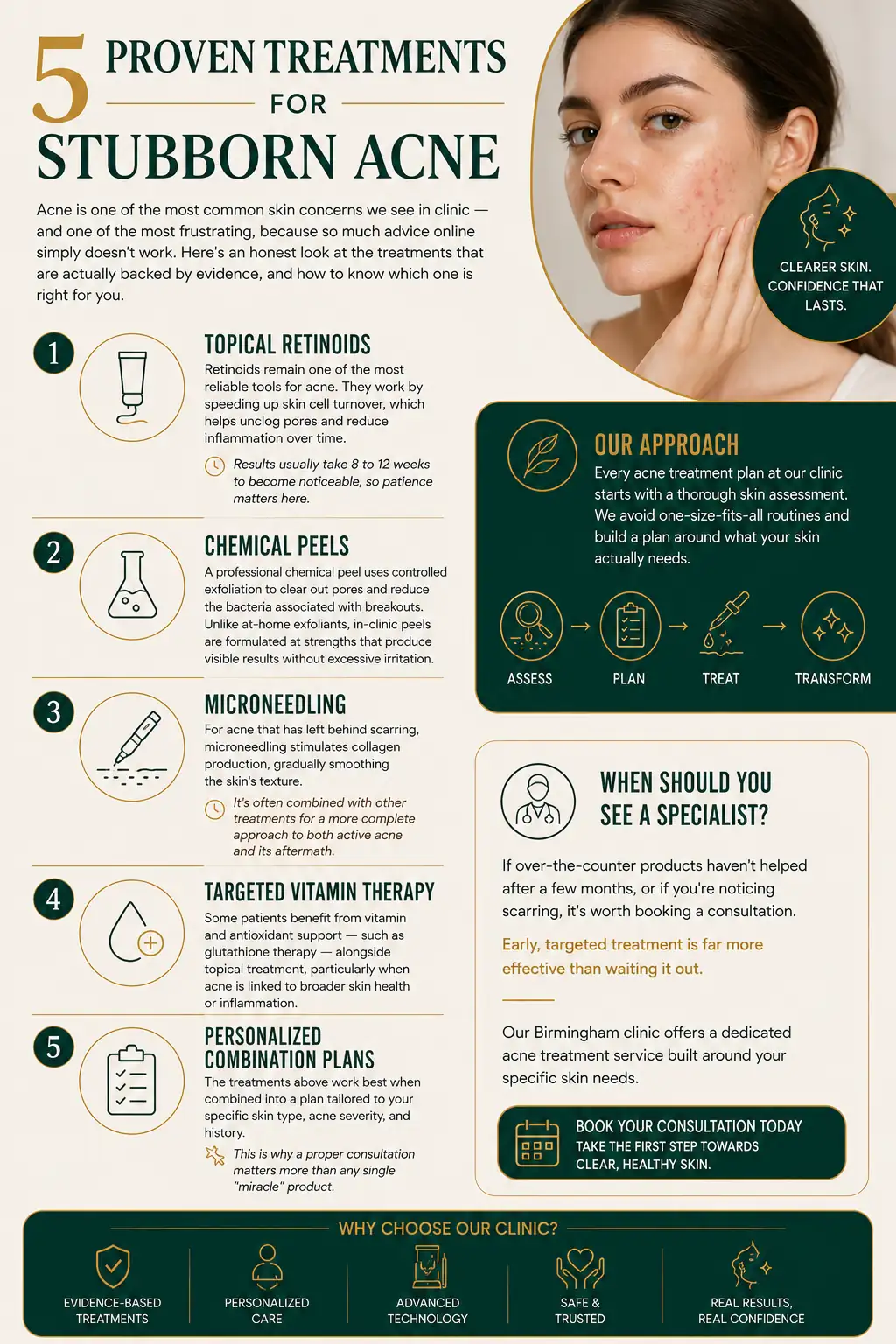
Acne is one of the most common skin concerns we see in clinic — and one of the most frustrating, because so much advice online simply doesn't work. Here's an honest look at the treatments that are actually backed by evidence, and how to know which one is right for you.
1. Topical Retinoids
Retinoids remain one of the most reliable tools for acne. They work by speeding up skin cell turnover, which helps unclog pores and reduce inflammation over time. Results usually take 8 to 12 weeks to become noticeable, so patience matters here.
2. Chemical Peels
A professional chemical peel uses controlled exfoliation to clear out pores and reduce the bacteria associated with breakouts. Unlike at-home exfoliants, in-clinic peels are formulated at strengths that produce visible results without excessive irritation.
3. Microneedling
For acne that has left behind scarring, microneedling stimulates collagen production, gradually smoothing the skin's texture. It's often combined with other treatments for a more complete approach to both active acne and its aftermath.
4. Targeted Vitamin Therapy
Some patients benefit from vitamin and antioxidant support — such as glutathione therapy — alongside topical treatment, particularly when acne is linked to broader skin health or inflammation.
5. Personalized Combination Plans
The treatments above work best when combined into a plan tailored to your specific skin type, acne severity, and history. This is why a proper consultation matters more than any single "miracle" product.
When Should You See a Specialist?
If over-the-counter products haven't helped after a few months, or if you're noticing scarring, it's worth booking a consultation. Early, targeted treatment is far more effective than waiting it out. Our Birmingham clinic offers a dedicated acne treatment service built around your specific skin needs.